

Chicago Product Liability Lawyer
A defective product caused your injury. You relied on the companies that designed, manufactured, and sold that product to make sure it was safe. They let you down. Now you’re in pain, you have medical bills piling up, and you can’t even work.
You need an experienced product liability lawyer to focus on identifying the defect, determining who is responsible, and building a case that gets results, whether at the negotiating table or in front of a jury.
At Neiman Injury Law Firm, we handle complex product liability cases involving defective consumer goods, contaminated food, and unsafe pharmaceutical or medical products, including those under FDA recall. These cases often require detailed investigation, expert analysis, and a trial-focused strategy from the outset. We’ve represented consumers in cases against large corporations for over 17 years, and we’ve recovered millions for our clients.
Wrongful Death
Wrongful Death






Case evaluation
Do you have a case?
Answer four quick questions to find out if your situation may qualify as a product liability claim.
What Is Product Liability?
Product liability law allows victims to pursue compensation when a defective or dangerous product causes injury. These claims are typically brought against manufacturers, distributors, and others involved in placing the product into the stream of commerce.
When a product injures you, the law doesn’t require you to prove that anyone was careless. Under product liability law, the questions are simpler:
- Was the product defective?
- Did you use the product in a foreseeable way?
- Did that defect cause your injury?
This legal framework, known as strict liability, holds manufacturers, distributors, and sellers accountable for putting unsafe products into the marketplace. It exists because the companies that design, make, and sell products are in the best position to ensure those products are safe. When they fail at that responsibility, they can be held liable for the consequences, even if they followed their own internal procedures.
The law does not require you to prove a manufacturer was careless. If a product is defective and causes injury, the company may be liable even if it claims to have followed standard procedures.
Examples of Product Liability Cases
Product liability claims often arise from everyday situations where a product fails in a way that was not expected.
Examples include:
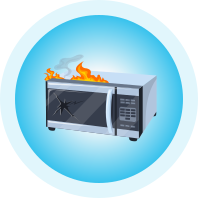
A household appliance that overheats and causes a fire
A contaminated food product that causes serious illness



A child’s product with a design flaw that leads to injury
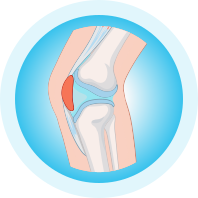
A medical device that fails after implantation

A prescription drug with undisclosed risks that results in long-term complications
In each of these situations, the key legal question is whether the product was unreasonably dangerous when it left the manufacturer’s control and whether that defect caused measurable harm.
Three Types of Product Defects
Not all product liability claims are the same. The type of defect at the center of your case shapes how it is investigated, what evidence is needed, and who may be responsible.

Design Defects
A design defect exists when a product is inherently dangerous. Not because something went wrong in manufacturing, but because the product was designed that way. Every unit off the line carries the same flaw. These cases often require engineering analysis to show that a safer alternative design was feasible and would have prevented the injury.

Manufacturing Defects
A manufacturing defect occurs when a product departs from its intended design during production. The blueprint may have been sound, but something went wrong in assembly, with the materials used, or in quality control. The result is a product that behaves dangerously in ways the design never intended.

Failure to Warn
Some products carry inherent risks that users have no reasonable way of knowing about. When a manufacturer fails to provide adequate warnings or instructions about known dangers, a failure-to-warn claim may arise. These cases are especially common in pharmaceutical and medical device litigation, where undisclosed side effects can cause serious, long-term harm.
What Types of Cases Do We Handle?
Defective Consumer Products
From household appliances and children’s toys to vehicle components and power tools, defective consumer products cause serious injuries every day. These cases often involve design flaws, manufacturing errors, or missing safety warnings, and they may implicate manufacturers, distributors, and retailers alike.
Foodborne Illness and Contaminated Products
Contaminated food cases involve a distinct investigative process, including tracing the source of contamination through complex supply chains and establishing the link between the product and the illness. These claims can arise from bacterial contamination, undisclosed allergens, or foreign materials introduced during processing or packaging.
Pharmaceutical and Medical Device Injuries
Drug and medical device cases are among the most technically demanding in product liability law. They often involve failure-to-warn claims where a manufacturer knew about serious risks and failed to disclose them to patients or prescribing physicians. Many of these cases are part of broader mass tort litigation involving large numbers of injured individuals.
These cases frequently involve large manufacturers with significant legal resources. Pursuing them requires the ability to investigate complex supply chains, analyze technical evidence, and prepare a case capable of withstanding aggressive defense tactics.
“The companies on the other side of these cases don’t wait to build their defense. By the time a client comes to us, the manufacturer’s legal team has often been working the file for months. That’s why we start building our case from day one, not after discovery closes.”
~ David Neiman


How Product Liability
Cases Are Proven
Winning a product liability case requires more than showing that a product failed and an injury resulted. It requires establishing a clear, evidence-based connection between the specific defect and the specific harm.
At Neiman Injury Law Firm, that process typically begins before a lawsuit is ever filed. We investigate how the product was designed and manufactured, review internal company documents and testing records, and retain specialists who can explain complex technical failures in terms a jury can understand and act on.
Building this kind of case takes time, resources, and preparation. We approach every product liability matter as if it will go to trial, because the strength of that preparation affects every phase of the case, including how seriously an opposing party treats settlement.

Preserve the product if at all possible. Do not discard it, repair it, or let it be returned. The physical product, along with any packaging, instructions, or receipts, may become the most important evidence in proving what went wrong and why.
The Role of Experts in Product Liability Cases
Most product liability cases cannot be won without expert testimony. The defects at issue, whether in design, manufacturing, or warnings, often involve technical questions that go well beyond what a judge or jury can evaluate on their own.
Depending on the nature of the case, experts may include:
- Engineers who analyze how a product was designed and where it failed
- Medical professionals who establish the connection between the defect and the injury
- Industry specialists who evaluate whether the product met applicable safety standards
- Economists who calculate the full financial impact of the harm, including future costs
Selecting the right experts and presenting their analysis clearly and persuasively is one of the most consequential decisions in a product liability case. It is also where experience matters most.
How Manufacturers Defend These Cases
Manufacturers and their insurers do not accept liability quietly. When a product liability claim is filed, they typically respond with a coordinated defense strategy that may include:



These defenses are often supported by the manufacturer’s own internal experts, extensive documentation, and legal teams that have experience in minimizing exposure. Countering them effectively requires a thorough understanding of the product, the applicable law, and the weaknesses in the defense narrative.


“Manufacturers have spent years building defenses before anyone ever files a claim. They know their products, they know the science, and they know how to use both. Our job is to know it better, and to make sure the jury understands what the evidence actually shows.”
~ David Neiman
Why Early Investigation
Matters
In product liability cases, the window for preserving critical evidence can close quickly. Products get discarded, repaired, or returned. Manufacturing records get archived or destroyed. Witnesses’ recollections fade. Taking action early, before any of that happens, can be the difference between a strong case and one that’s difficult to prove.
Early steps typically include securing and preserving the defective product, identifying everyone in the chain of distribution, obtaining relevant manufacturing and testing records, and documenting the injury and its impact from the beginning.
Product liability claims are also subject to a statute of limitations, which generally begins on the date of injury. In some cases involving the statute of repose, which can bar claims after a product has been in use for a certain number of years, the deadline may arrive even sooner. This makes timing especially important.
Who Can Be Held
Responsible?
Product liability claims don’t always end with the manufacturer. Responsibility for a defective product can extend throughout the distribution chain, and identifying every liable party is an essential part of pursuing full compensation.
Many product liability cases involve more than one responsible party. Liability may extend beyond the manufacturer to include:
- Distributors and wholesalers
- Retailers who sold the product
- Companies involved in assembly or installation
- Third parties responsible for maintenance or modification
If a product has been recalled, you may still have a valid claim. An FDA recall can serve as evidence that a defect existed, but it does not automatically compensate people who have already been injured.
How Product Liability Cases Are Resolved
Some product liability cases are resolved through negotiated settlements after investigation and expert analysis is complete. Others proceed to trial when liability is genuinely disputed or when the offers made do not reflect the true value of the claim.
At Neiman Injury Law Firm, we prepare every case for trial from the outset. Not because every case goes to trial, but because that preparation changes how the case is evaluated. Opposing counsel and insurers respond differently to a firm that is clearly ready to try the case than to one that is angling for a quick resolution.
Product Liability and Mass Torts
When a defective product causes harm to a large number of people, individual cases are sometimes coordinated through mass tort litigation or multidistrict litigation (MDL). These proceedings allow for more efficient handling of common legal and factual issues while preserving each person’s individual claim.
Neiman Injury Law Firm has experience in complex litigation involving widespread product-related harm, including cases where the firm has served in a leadership capacity. That experience informs how we evaluate and pursue cases that may be part of a broader pattern of injury.
What Compensation May Be Available
People injured by defective products may be entitled to recover both economic and non-economic damages. The value of any claim depends on the severity of the injury, the strength of the evidence, and the long-term impact on the person’s life and ability to work.
Recoverable damages in product liability cases may include:
Medical expenses and ongoing treatment costs

Pain and physical suffering

Loss of normal life



Lost income and reduced earning capacity

Emotional distress and psychological impact

Long-term care and rehabilitation needs
Some states limit the amount of compensation that can be recovered for non-economic damages, such as pain and suffering, in product liability cases. These limits are typically set by state law and can vary significantly depending on where the claim is filed.
Because product liability cases often involve manufacturers and conduct that extend beyond a single state, determining where a case can be brought, and how those laws apply, can be an important part of the strategy.
At Neiman Injury Law Firm, we handle product liability matters in jurisdictions across the country and evaluate these issues as part of building each case.
Why Product Liability Cases Are Complex
Product liability litigation is often more complex than other types of personal injury cases because these claims frequently involve:
- FDA recalls
- Large corporations with substantial legal resources
- Technical and scientific evidence
- Multiple potentially responsible parties
- Federal and state regulatory considerations
Manufacturers and insurers may attempt to dispute the existence of a defect, shift blame to misuse, or minimize the extent of injuries.
At Neiman Injury Law Firm, we approach these cases with a trial-focused strategy, preparing from the outset to address these challenges and present the case effectively.

Frequently Asked Questions About Product Liability
How long do I have to file a product liability claim?
The deadline to file a product liability claim depends on where the case is brought. In Illinois, personal injury claims are generally subject to a two-year statute of limitations, which typically begins on the date of injury.
The law may also apply a statute of repose in certain product liability cases, which can bar a claim after a product has been in use for a specified period of time, regardless of when the injury occurred.
In cases involving national manufacturers or widespread harm, determining the appropriate jurisdiction, and how these deadlines apply, can be an important part of the legal strategy.
Because these timelines can vary and may overlap, it is important to have a case evaluated as early as possible.
Do I need to prove the manufacturer was negligent?
No. Most product liability claims are governed by strict liability, which means you do not need to show the manufacturer acted carelessly. You need to show that the product was defective, that you were using it in a reasonably foreseeable way, and that the defect caused your injury.
Can I file a claim if I didn't purchase the product myself?
Yes. Product liability law protects anyone who is injured by a defective product, not just the original purchaser. If you were harmed by someone else’s product, you may still have a valid claim.
What if the manufacturer says I misused the product?
Misuse is one of the most common defenses manufacturers raise. But manufacturers are legally expected to anticipate the ways people will reasonably use their products – including uses that were not specifically intended. Whether misuse applies depends heavily on the specific facts, and it is often a weaker defense than manufacturers initially suggest.
What does it cost to hire a product liability attorney?
Neiman Injury Law Firm handles product liability cases on a contingency fee basis. That means there are no upfront fees and no costs to you unless we recover compensation on your behalf. Your initial consultation is free.