

Spinal Cord Injuries Lawyer
When your spinal cord is damaged, the injury reaches into every corner of your life: movement, independence, work, relationships, and your sense of who you are. If someone else’s negligence caused this harm, the law recognizes your right to hold them accountable and recover compensation that addresses both your immediate crisis and your long-term reality.
Neiman Injury Law Firm helps injury victims pursue the financial resources they need to adapt and move forward.
To discuss your case with one of our spinal cord injury lawyers, call us today at 312-581-1000. We offer FREE initial consultations.





What Changes When Your Spinal Cord Is Injured
The hours after a spinal cord injury blur together. Ambulances, emergency rooms, imaging scans, maybe surgery. Then comes the ICU, where you start to understand what “recovery” actually means. For many people, it means learning to live in a fundamentally different way.
Planning for the future becomes critical. Will you need another surgery in five years? What happens when your wheelchair wears out? How will you afford nursing care as you age? These aren’t hypotheticals. They’re realities that need to be factored into any legal claim.
“I’ve seen firsthand how a spinal cord injury affects not just the injured person but their entire family. Our firm works to build comprehensive claims that address your immediate needs and your long-term future. We’re here to handle the legal complexities so you can focus on your health and recovery.”
~ David Neiman

Understanding Spinal Cord Injuries
Spinal cord injuries range from incomplete injuries that allow some sensation and movement to complete injuries that are catastrophic and result in total loss of function below the injury site. These injuries often occur in car accidents, workplace incidents, falls, medical errors, and acts of violence.
Some of the most common causes of spinal cord injury cases our injury lawyers handle include the following:
Vehicle Collisions
Car, truck, and motorcycle accidents frequently result in spinal trauma when the impact causes the body to twist, compress, or extend beyond normal limits. Drivers and passengers may experience whiplash-type injuries that affect the cervical spine or more severe compression fractures in rollover accidents.
Workplace Accidents
Construction sites, warehouses, and industrial facilities present serious fall risks and heavy equipment hazards. Workers who fall from scaffolding, ladders, or elevated platforms may land on their back or neck.
Slip and Fall Incidents
Property owners have a responsibility to maintain safe premises. Wet floors, icy sidewalks, poor lighting, and uneven surfaces can cause falls that result in spinal injuries, particularly among older adults who may have less bone density.
Medical Malpractice
Surgical errors, anesthesia complications, and delayed diagnosis of spinal conditions can lead to preventable spinal cord damage. When healthcare providers fail to meet the standard of care, patients may suffer permanent injuries that could have been avoided.
Damages Available in a Spinal Cord Injury Lawsuit
When negligence causes a spinal cord injury, the responsible party owes compensation for the harm they created. The courts recognize both economic and non-economic losses.
Economic damages cover measurable financial losses:
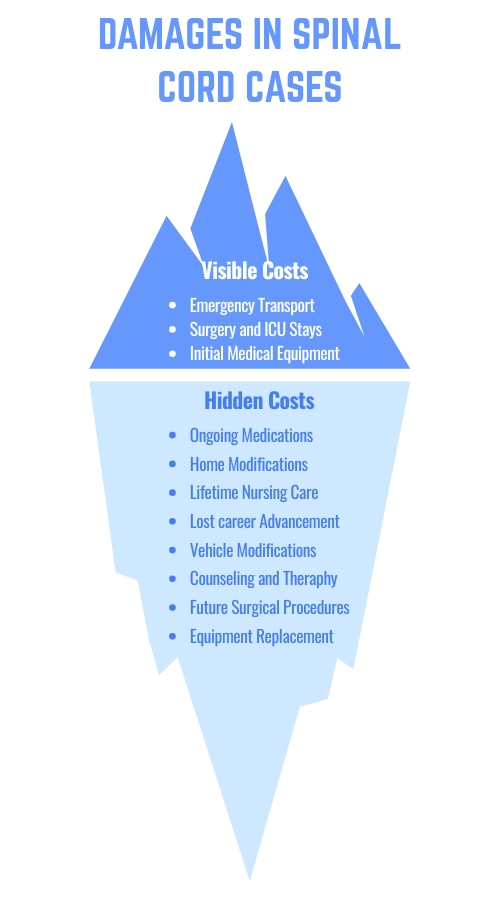
- Emergency transport, surgery, ICU stays, rehab facilities, and ongoing medical care
- Medications, wheelchairs, hospital beds, and specialized medical equipment
- Vehicle modifications and home renovations for accessibility
- Personal care assistance and nursing support
- Lost wages and reduced earning capacity
These expenses extend far beyond initial treatment. Wheelchairs require replacement every five to seven years. Complications often necessitate additional surgeries. Promising career paths close off, eliminating future promotions and salary increases that would have accumulated over decades. Accessibility needs evolve as your living situation changes, requiring ongoing adaptations.
Non-economic damages address losses without price tags: physical pain that disrupts sleep, frustration of depending on others for basic tasks, grief over lost abilities, strained relationships, and missed experiences due to accessibility barriers.

Frequently Asked Questions About Spinal Cord Injury Cases
How much time do I have to take legal action for spinal cord injuries?
The statute of limitations varies depending on the jurisdiction, the cause of the injury, and who the lawsuit is against. Illinois allows two years from the injury date to take legal action in most cases, but in other states, the deadline might be shorter or longer. Claims involving government defendants often require formal notice within just a few months. Medical malpractice claims follow different timing rules. The safest approach is consulting with an attorney quickly so you know exactly which deadline applies to your specific situation.
Can I file a lawsuit if my injury happened while I was working?
Workers’ compensation generally prevents you from suing your employer, but it doesn’t bar claims against third parties whose negligence contributed to your injury. If a negligent driver hit you while you were making deliveries, if defective equipment malfunctioned and hurt you, or if a property owner’s carelessness caused your fall on a job site, you likely have a separate personal injury claim beyond your workers’ comp case.
Your Next Steps Start Here
Spinal cord injuries create urgent needs and long-term concerns. You need someone who grasps both the immediate pressure you’re under and the complexities that will unfold over time.
Neiman Injury Law Firm brings that understanding to every case we handle.
Call us today at 312-581-1000.