

Brain Injury Lawyer
A traumatic brain injury can change your life in an instant. Whether you’re facing medical bills, lost income, or an uncertain future, you deserve a legal team that understands what you’re going through, and pursues the compensation you need to move forward.
Brain injuries can change how you think, move, and interact with others, often requiring long-term medical care, rehabilitation, and lifestyle adjustments. At Neiman Injury Law Firm, we help brain injury victims and their families seek the compensation they need to move forward.
If you or someone you love suffered a brain injury due to another party’s negligence, you have the right to seek compensation. We handle the legal process so you can focus on recovery. Call Neiman Injury Law Firm at 312-581-1000 for a free consultation.





Why Choose Neiman Injury
Law Firm
We understand that no amount of money can undo a brain injury, but fair compensation provides the resources you need to adapt and access the best possible care. Our firm is committed to standing beside you through every step of the legal process while treating you with the respect and compassion you deserve. Reach out to our team at Neiman Injury Law Firm to discuss your case with a brain injury lawyer who will fight for your future.
“I know how overwhelming it can be to face a brain injury while trying to navigate insurance claims and legal deadlines. My goal is to remove that burden from your shoulders so you can focus on your health and your family. We’ll handle the legal fight while you concentrate on getting better.”
~ David Neiman

Understanding Traumatic Brain Injuries
A traumatic brain injury (TBI) occurs when an external force causes brain dysfunction. This can happen through a direct blow to the head, a penetrating injury, or rapid acceleration and deceleration that causes the brain to move inside the skull. While some TBIs are mild, others are classified as catastrophic injuries.
Mild Traumatic Brain Injuries
Often called concussions, mild TBIs can cause confusion, headaches, dizziness, memory problems, and sensitivity to light or noise. While symptoms may resolve within weeks or months, some individuals experience persistent issues that affect their quality of life and ability to work.
Moderate to Severe Brain Injuries
These injuries may involve loss of consciousness, skull fractures, bleeding in the brain, or contusions. Survivors often face cognitive impairments, motor skill deficits, speech difficulties, emotional changes, and chronic pain. Recovery may require years of therapy and adaptive equipment.
Acquired Brain Injuries
Not all brain injuries result from trauma. Acquired brain injuries can occur due to oxygen deprivation, infections, strokes, or toxic exposure. Regardless of the cause, victims may be entitled to compensation if another party’s negligence contributed to the injury.
Long-Term Effects of Brain Injuries
Brain injuries can lead to permanent disability, personality changes, seizure disorders, and increased risk of degenerative conditions. Many survivors require ongoing medical care, occupational therapy, and modifications to their homes and vehicles.
Recognizing Signs of a Brain Injury
Brain injury symptoms don’t always appear immediately. Some people feel fine at the scene of an accident, only to develop serious symptoms hours or days later.
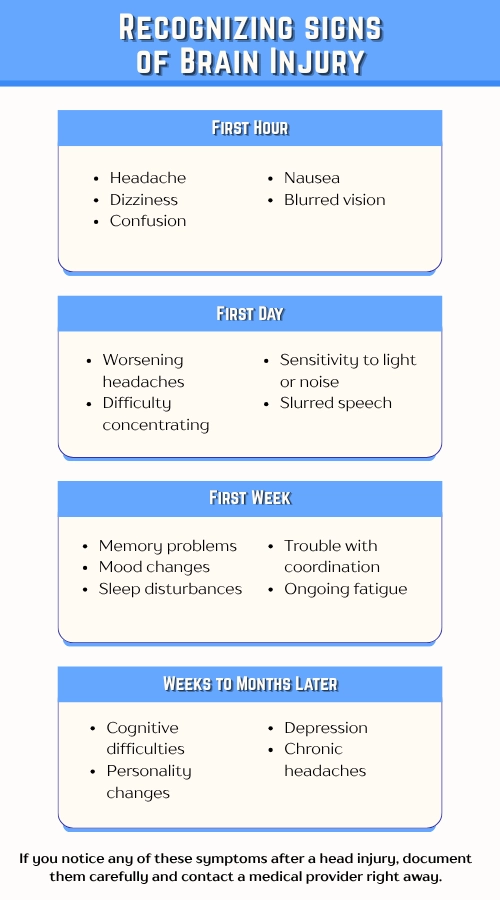
In the first hour after a head injury, you may experience headache, dizziness, confusion, nausea, or blurred vision. Loss of consciousness is not required for a brain injury to be serious.
Within the first day, watch for worsening headaches, difficulty concentrating, sensitivity to light or noise, or slurred speech. If symptoms intensify rather than improve, seek medical attention immediately.
During the first week and beyond, symptoms may expand to include memory problems, mood changes, sleep disturbances, trouble with coordination, and ongoing fatigue. Long-term effects like cognitive difficulties, personality changes, depression, or chronic headaches may emerge weeks or months later.
If you notice any of these symptoms after a head injury, document them carefully and contact a medical provider right away.
Common Causes of Brain Injuries
Brain injuries happen in many ways. When negligence plays a role, victims have legal options.
Some of the most common causes of brain injury cases we handle include:
- Motor vehicle accidents
- Slip and fall accidents
- Workplace accidents
- Sports and recreational injuries
- Medical malpractice
- Defective products
Identifying the cause of TBIs can help determine who may be responsible and what evidence to collect.

Frequently Asked Questions
How do I know if I have a brain injury?
Symptoms may include persistent headaches, confusion, memory problems, dizziness, nausea, mood changes, sensitivity to light or sound, and difficulty concentrating. If you hit your head or experienced a violent jolt, seek medical evaluation immediately, even if you feel fine initially.
What if my brain injury symptoms appeared days after the accident?
Delayed symptoms are common with brain injuries. Some effects may not become apparent until hours or days later. Document when symptoms began and see a doctor right away. You may still have a valid claim even if you didn’t seek treatment immediately after the accident.